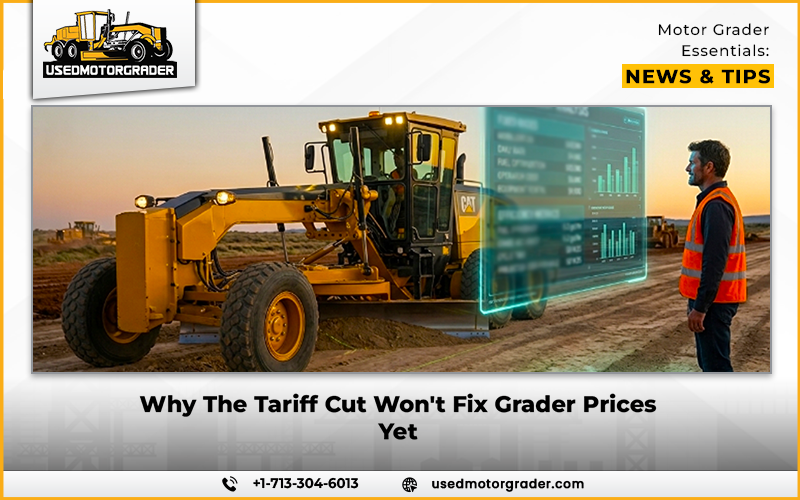
The recent tariff decrease on construction equipment has sparked excitement throughout the industry. Many contractors and fleet owners expected motor grader pricing to drop virtually immediately. However, the market has not reacted as rapidly because tariffs are only one aspect influencing equipment pricing. Inventory levels, production costs, transportation, finance, and demand continue to influence pricing. So, with tariffs decreased, why are motor grader prices still high? The solution resides in how the construction equipment market operates.
Will The Tariff Cut Lower Motor Grader Prices Immediately?
No, lowering tariffs alone is unlikely to cut grader prices in the medium term because manufacturers, dealers, inventory cycles, financing costs, freight expenditures, and market demand continue to influence pricing. While recent policy changes have cut certain Section 232 levies on imported products, the savings will take time to flow through the supply chain.
Tariffs have a direct impact on manufacturing costs, therefore the news raised expectations. However, the equipment currently in dealer inventory were purchased months ago at a greater cost. Dealers cannot lower prices abruptly without affecting their profitability. As a result, customers seeking used motor graders for sale should not expect immediate price drops just because tariff policies have changed.
The current tariff revisions are just one chapter in a much wider story. Before examining current pricing patterns, read our comprehensive report on How Trump Tariffs Are Shaping the Heavy Construction Equipment Industry to see how trade policies have impacted equipment availability, production costs, and dealer strategy in recent years.
Five Reasons Grader Prices Are Still Holding Firm
1. Existing Dealer Inventory Was Purchased at Higher Costs
Most merchants are still selling goods obtained prior to the tariff drop. Those machines were purchased at much higher material, transportation, and acquisition expenses.
Unlike consumer goods, construction equipment travels slowly through the market. A motor grader might be in inventory for months, thus today’s pricing frequently reflects yesterday’s costs. Price reductions are unlikely to occur until older inventory is cleared.
2. OEM Manufacturing Costs Remain Elevated
Tariff reduction does not erase the high cost of manufacturing a motor grader. Manufacturers continue to confront elevated expenses for:
- Steel and Aluminum
- Copper, electronic components
- Hydraulic systems
- Long-term supplier contracts.
Many OEMs often buy components through annual agreements, which limits their ability to benefit quickly from lower tariffs. Furthermore, electronic parts remain pricey due to high demand from many businesses. These continuous production expenses continue to sustain current equipment prices, which is why late-model used motor graders for sale have maintained their market worth despite recent policy changes.
3. Freight And Logistics Costs Haven’t Returned To Pre-Tariff Levels
Transportation is a significant pricing factor. Although some import duties have been reduced, transporting large equipment and replacement parts remains expensive. Ocean freight prices are lower than they were during the epidemic, but inland trucking, fuel price volatility, port handling fees, and large equipment transportation continue to drive up costs across the supply chain.
These expenses apply to both new and old machines. Every additional logistical cost is eventually reflected in the final selling price, delaying the impact of any tariff reductions.
4. High Demand Still Supports Premium Pricing
Demand exceeds supply in a number of important industries. Reliable motor graders are needed for infrastructure development, highway expansion, mining operations, renewable energy projects, data center construction, and municipal road maintenance.
Dealers have no incentive to drastically cut prices as long as contractors compete for top-notch equipment. Industry assessments indicate that late-model equipment with documented service histories continues to command a premium price because buyers prioritize uptime and longevity over any initial savings.
5. Buyer Behavior Is Still Affected by Financing Costs
Even if equipment prices stabilize, financing costs remain greater than many consumers had anticipated. Leasing rates, borrowing charges, and equipment loans all have a direct influence on purchasing decisions.
For many builders, renting is still the most sensible choice until the economy improves. Because they provide steady performance at a reduced initial cost, some customers prefer used motor graders for sale. Finally, the purchase price alone is typically not as important as the overall monthly cost of ownership.
New vs Used Motor Graders, Which Market Will React First?
The used market often reacts faster than the new equipment market because it is influenced by auction results, fleet trade-ins, and equipment availability rather than just manufacturer pricing. New grader prices are highly influenced by OEM production costs, annual pricing plans, and manufacturing schedules.
Used machines are also appraised according to their condition, maintenance history, and running hours rather than a predetermined manufacturer’s suggested retail price. This flexibility allows the secondhand market to respond more quickly, however major price drops are unlikely as long as demand remains high.
What Contractors Should Watch Before Waiting For Prices To Fall
Instead of depending on tariff headlines, watch the indicators that truly determine equipment values.
- OEM price announcements
- Dealer Inventory Levels
- Auction Market Trends
- Used equipment availability
- Infrastructure Spending
- Interest Rate Movements
- Steel Prices
- Fuel prices.
These market signals often provide a more accurate picture of future pricing than policy statements alone.
Expert Purchasing Guidance for 2026
- If you find a late-model grader with verified maintenance records, have an ongoing project, financing has already been approved, or leasing rates are increasing, buy now.
- If your purchase is not urgent, you expect manufacturer discounts in the future, or your chosen model’s inventory is now limited, wait.
Why Stable Prices Can Be Better Than Falling Prices
Many purchasers believe that declining prices always generate better chances. In actuality, constant pricing typically protects resale value, minimizes depreciation, increases trade-in values, improves fleet planning, and assists rental organizations in maintaining profitability. A steady market also increases contractors’ confidence when making long-term equipment expenditures.
Final Verdict: True Equipment Value Goes Beyond Tariffs
The recent tariff reduction is a positive step, but it will not transform grader pricing overnight. Dealer inventories, manufacturing costs, logistics, financing, and strong demand continue supporting current values. Rather than waiting for dramatic price drops, focus on total ownership costs, machine condition, and long-term value.
If you are looking for used motor graders for sale, selecting a well-maintained machine with a proven service history is frequently a better investment than waiting for market fluctuations. Visit our used motor graders inventory now and select the machine that best meets your project requirements. We already provide competitive rates, allowing you to begin your project without waiting for the best offer to arrive. You can buy or rent our machines.
Frequently Asked Questions
Will grader prices fall after the tariff cut?
Not immediately, because several cost factors still influence pricing.
Does the tariff reduction apply to every motor grader?
No. The impact depends on manufacturing location, imported components, and supplier costs.
Are used grader prices expected to decline in 2026?
Minor adjustments are possible, but strong demand should support overall values.
Is renting a grader a better option right now?
It can be for short-term projects or when financing costs remain high.
Tags: 2026 Motor Grader Prices, Used Motor Grader Price Trends, Used Graders For Sale