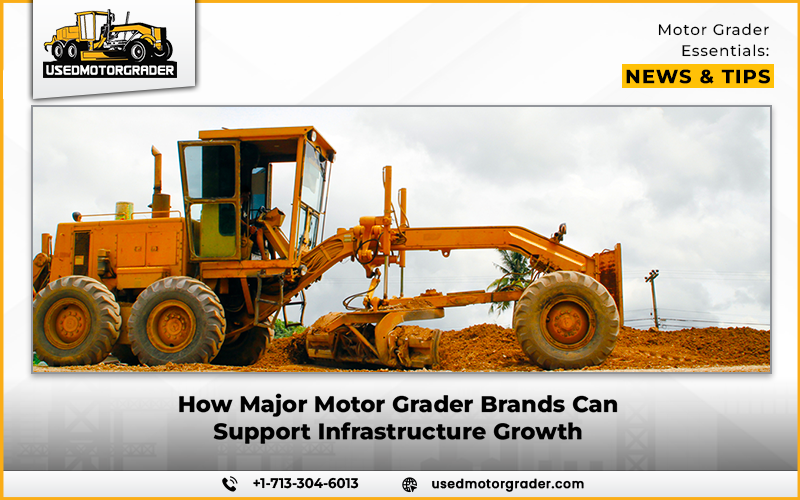
Poor roads cut millions of people across Africa, South Asia, Southeast Asia, and Latin America off from the rest of the world every day, not water, mountains, or any other natural barrier. Flooded unpaved roads, rutted roads that swallow trucks, and rural communities that have not seen a grading machine in years. This is not a trivial annoyance. It hinders economic development, agricultural trade, health care, and education. It’s right where big motor grader brands have a real, practical part to play.
The Infrastructure Gap Is Real & Growing
Currently, just 43% of roads in Africa are paved. In South Asia and Southeast Asia, millions of kilometers of rural and semi-urban roads are either unpaved or poorly maintained. In 2024, the global motor grader market was valued at around USD 6.8 billion and is expected to grow to USD 9.9 billion by 2035. That growth is not just a coincidence. The need for infrastructure in developing economies is propelling it.
Indian, Nigerian, Kenyan, Indonesian, Brazilian, and Philippine governments are spending billions on road networks, rural connectivity initiatives, and urban expansion. In recent years, funding for rural roads has risen 30 to 40 percent in developing countries in Southeast Asia and Africa. But not in the rest of the world. The demand for grading machinery is also on the rise, following that investment.
Why Motor Graders Are the Backbone of Road-Building in Emerging Markets
Motor graders support road construction and maintenance in developing economies because they offer versatility, cost-effectiveness, and the ability to operate in difficult terrain. When it comes to highway and infrastructure work, motor graders are always on the job. Whether it’s preparing road base, maintaining gravel surfaces, or shaping drainage, they remain the machine to beat.
In low-income infrastructure environments, here’s why graders are so important:
- They can keep hundreds of kilometers of unpaved roads in good condition. With little use of materials, an important factor in areas where paved roads will not be available for several years.
- They can be more efficient than bulldozers in road shaping and surface leveling. This can save time and labor in construction.
- They are important for drainage ditching and slope work. They also have a direct impact on road life in high rainfall areas.
- They can maintain large areas of gravel roads, preventing the rapid deterioration of the roadway and preserving the investment in infrastructure over the long term.
How Top Motor Grader Brands Can Become Real Development Partners
Each of the leading motor grader brands, such as Caterpillar, Komatsu, Volvo Construction Equipment, John Deere, CASE, and Chinese brands like SANY, XCMG, and LiuGong. They have their own set of strengths for the development markets. It’s not only about who is selling the most machines, but it’s also about who’s developing long-term relationships with contractors, governments, and infrastructure agencies.
These brands can actually help developing economies in a few tangible ways:
- The expansion of certified used and refurbished equipment programs brings quality graders within the reach of contractors who may not be able to afford new equipment, especially small contractors in the road construction industry on tight budgets.
- Flexible financing and leasing options, such as government-backed partnerships with regional development banks and institutions such as the World Bank, help make it easier for public agencies to purchase modern grading fleets.
- Regional assembly plants and local parts warehouses lower import expenses, shorten spare parts delivery times, and make ownership more economically viable. Throughout Africa, South Asia, and Latin America.
- Dealer expansion in areas that are not well-served guarantees that if a machine breaks down on a remote road project, it will be taken care of soon. Not weeks later.
Chinese manufacturers such as SANY, XCMG, and LiuGong have been especially active in providing lower price points and simplified machine designs to meet emerging market conditions, challenging premium Western brands to respond to their value proposition.
Technology, Training, and Durability: Getting the Balance Right
A major paradox in emerging market equipment strategy is between innovation and field conditions. GPS grading systems, telematics, automated blade control, and predictive maintenance are all very useful. But only if operators are trained, and connectivity is reliable.
The best brands of motor graders in developing countries will be those that strike the balance. In remote infrastructure settings, crews often benefit more from durable, field-serviceable machines than from complex electronic systems that require specialist support.
Understanding the skills required of a motor grader operator helps to put the big picture of training into perspective. Emerging markets suffer from a major productivity loss due to skilled operator shortages. Brands that invest in simulator-based training, local vocational training partnerships, and remote diagnostics support are not only selling equipment. But they are also creating the human infrastructure that makes road networks possible.
In areas where the cost of diesel is high compared to project budgets, fuel efficiency is also an important consideration. Modern graders that provide quantifiable fuel savings and require no complicated maintenance can significantly lower the life-cycle operating cost of a grading fleet.
The Competitive Landscape Through 2030
The global motor grader market is becoming more competitive. Chinese manufacturers are making inroads with low pricing, quick delivery, and models that cater to the type of projects dominating infrastructure spending in developing countries. Meanwhile, reliability, reputation, dealer support, and resale value remain key battlegrounds. Among established top motor grader brands, including Caterpillar and Komatsu.
Rigid-frame graders continue to command the largest share in developing markets. They are cost-effective and have proven to be durable. Industry analysts project that companies will sell more than 45,000 grader units worldwide by 2026. Growing demand is expected to come primarily from Southeast Asia, Sub-Saharan Africa, and South Asia. Rental fleet growth is also picking up as contractors choose flexibility over ownership.
The brands that create local service networks, offer financing options that fit the cash flow of emerging markets, and keep machines running in remote conditions will gain market share over the next 10 years.
Looking to buy the perfect motor grader for your job?
From government road programs to growing contractor fleets and equipment sourcing for rural road infrastructure projects, reliable, well-maintained graders from trusted brands are a game-changer. Shop the best motor grader brands at usedmotorgrader.com for used motor graders that are high quality, affordable, and built to perform.
FAQs
1. Why are motor graders so important for road construction in developing nations?
A: In areas with extensive gravel and dirt road networks, motor graders are the most economical machines for road construction and maintenance, shaping drainage, and preparing road bases. These are the most common uses of these machines.
2. What do top motor grader brands offer developing markets that smaller brands cannot?
A: The leading brands of motor graders offer worldwide dealer networks, certified parts, financing options, and extended service support. This helps minimize downtime and total ownership costs on large-scale infrastructure projects.
3. Are used motor graders a good option for emerging market contractors?
A: Yes. For contractors and government agencies with limited budgets for infrastructure, certified used graders from trusted brands provide substantial value. Without compromising reliability.
4. How are Chinese grader manufacturers changing competition in developing nations?
A: Competitors such as SANY, XCMG, and LiuGong are taking market share by providing lower purchase prices, easier machine designs for harsh environments, and quicker parts supply. In areas where traditional brand dealer networks are less developed.
Tags: Motor Grader Brands, Motor Graders for Infrastructure Projects, Grader Industry Growth