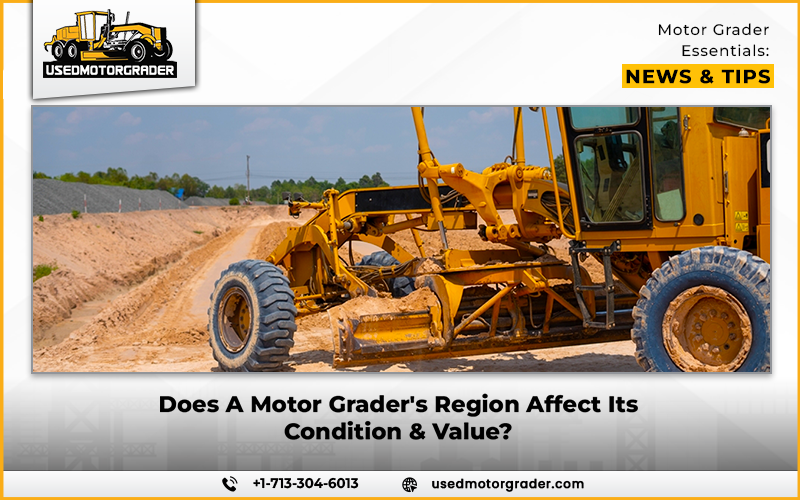
Two motor graders. The same model, the same hour meter reading, the same asking price. One spent its entire working life cutting roads through the arid inland of Texas. The other spent its winters salting the county roads of the snow-belt. On paper, they look identical, but in reality, they are worlds apart, and experienced buyers in the 2026 grader market know which machine they would rather take home. Region of origin is never just background; it is one of the surest indicators of true value.
Does Where a Motor Grader Worked Actually Change What It’s Worth?
Yes, and it can be substantial. A machine’s working region affects far more than simply the paint’s appearance. Directly impacting frame integrity, electrical condition, hydraulic wear, circle drive wear, and long-term serviceability. Far better than any hour meter ever could. When considering each of these regional influences, here is the importance of each environment, in no particular order:
- Snow-Belt Regions: Salt applied to snow-belt roads corrodes and eats into the machine from articulation joints, undercarriage welds, and wiring to the circle drive. It is damage that may not be immediately apparent but will be very costly down the line.
- Coastal Regions: Salt air attacking coastally exposed units in the same fashion will have the same effect, eating into machine framing and paint while working from the outside in to corrode components with subsurface rust, which a casual inspection would not show.
- Wet Southern Regions: Wet, mucky southern ground can wear circle drive teeth down as fast as, or faster than, the arid south.
- High Desert Regions: The abrasive nature of high desert conditions will wear cutting edges more quickly, though this will generally be more visible and easier to account for in inspection.
- Mountainous Regions: Heavy, impacting loads in rocky mountain and higher altitude terrain wear down driveline and final drive components while also beating up the hydraulic fluids and engine from cold starts.
As research on corrosion-influenced vehicles consistently indicates that those vehicles from regions with heavy road salt exposure are worth an estimated 20% less than comparable models in areas without road salt exposure. This directly applies to the used grader market. Buyers interested in purchasing any used motor graders for sale in the USA will benefit from using this breakdown of expected price differences by region when scrutinizing lists of available equipment.
Which Regions Produce the Cleanest & Most Problematic Used Graders?
There is a clear, unspoken hierarchy in the used grader market by region. Graders coming from inland west regions, central plains, and dry-climate agriculture states frequently appear for sale. In excellent condition with minimal corrosion and a consistent service history. The savvy buyer knows to search for these units. Texas holds a key spot here as a major construction state. With high fleet turnover and arid weather, making its inland machinery very valuable. Understanding why the demand for Used Motor Graders For Sale In Texas operates the way it does helps both buyers and sellers set realistic expectations at auction.
At the other end of the list, we have snow-belt, county-owned fleet units and coastal machines that come in at lower valuations, which is very justifiable. Southern municipal fleet units that have seen decades of salt use will bring to market graders with layers of rust and corrosion in every part of the machine. From the frame up to the electrical harness, to undercarriage components. Machines from the Gulf Coast region require particular attention, as constant moisture from humidity and salt air creates relentless external corrosion. These are not unsellable units, but will require further, more in-depth scrutiny and a lower appraisal.
Are Graders From Dry Regions Worth More Than Units From Wet or Snowy Markets?
Yes, in almost every instance, and significantly more than what the hour meters alone might indicate. For machines with similar operating specs and hour readings, the region of operation often is the differentiator at auction. Experienced grader buyers are looking for:
- Clean circle drive components on machines from arid climates versus rusty welds on the frames of the others.
- Shiny cylinder rod surfaces on dry-climate machines versus pitted and scarred surfaces of southern machines from salt air exposure.
- Reliable electrical systems on machines that have not been exposed to constant moisture.
This increased value for units from dry climates is not arbitrary. It is due to the very real increased residual service life, inspection certainty, and decreased long-term costs of ownership. Associated with machines used in drier, less corrosive climates. When buyers are looking at any used motor graders for sale in the USA, knowing that climate has played a role in machine value will assist in weeding out less optimal options from the very beginning. Knowing that used motor graders for sale in Texas that came from within the dry portions of the state have shown superior inspection results. This will benefit both buyer and seller, and central Texas machines also show excellent results on inspection, regardless.
What to Inspect More Carefully Based on Regional Origin
While any pre-purchase inspection should be comprehensive, units from wetter or salt-influenced areas warrant special attention to:
- Welded joints in the frame and in articulated portions of the machine are prone to cracking, especially if the unit comes from the snow-belt or coastal areas, due to road salt.
- Circle drive gear condition for excessive wear on units from wet climates, especially areas known for high muck.
- Undercarriage and floorboards with specific attention to wiring below the cab, especially on coastal or southern machines, for corrosion caused by moisture.
- Hydraulic cylinder rod condition on units from any region, but especially coastal, for scoring due to salt in the air.
- Cab door seals and floorboard areas for any evidence of moisture ingress and future corrosion problems.
FAQs
1. Does regional climate affect resale value more than machine hours?
A: In some cases, it is entirely possible. When all other factors appear equal, the real-world value of the same unit can be dramatically different. It may simply cost more in maintenance to address frame corrosion in a salt climate. Than it does to have more hours on a clean machine.
2. Are used motor graders for sale in Texas generally cleaner than northern fleet units?
A: Generally speaking, any graders coming from the drier inland portions of Texas are more consistently found in good condition. With fewer issues from corrosion than most units from the snowy northern portions of the country. While coastal machines from the southern portions of Texas will still require more cautious inspection than most other areas. Central Texas units are typically a solid purchase.
3. Which regions consistently produce the most problematic used graders?
A: Snow-belt regions and any area in which the roads are extensively treated with road salt. As well as the southern portions of the US, are consistently proving to have machines that require the most intensive repair. Due to frame and electrical corrosion.
4. Should buyers pay a premium for dry-climate graders?
A: A modest regional premium is usually justified. The cost of addressing salt-related corrosion or moisture damage during ownership often exceeds whatever savings came from buying the cheaper coastal or northern unit upfront.
Tags: Grader Condition By Region, Used Motor Grader Resale Value, Best Regions For Used Graders USA