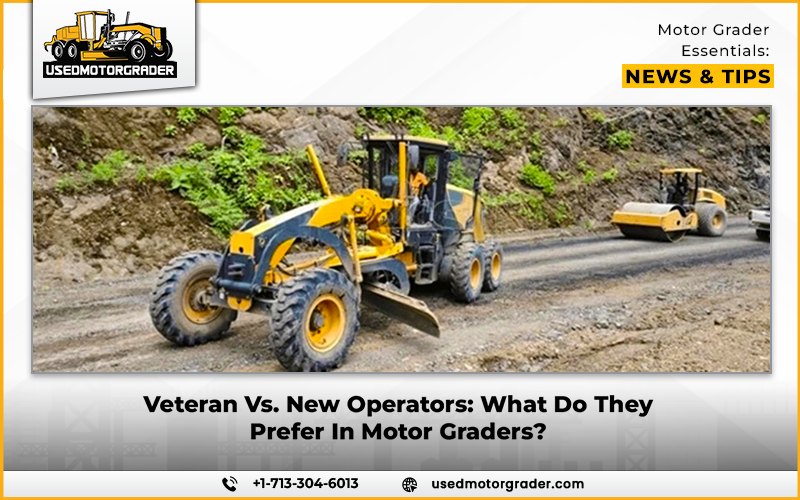
The motor grader business is experiencing an evident shift. On the one hand, there are the veteran operators who developed their skills through manual control and machine feel. On the other hand, new operators entering the field are heavily relying on technology, automation, and simplified controls. This gap is influencing the design of machines by OEMs and how buyers assess used motor graders and determine the most suitable motor graders on the market today.
Manual Skill vs. Technology: A Clear Divide
The fundamental aspect of this discussion is the replacement of skill-based operation with technology-assisted grading.
- Experienced operators use years of experience, blade control, and visual judgment.
- New operators rely more on GPS, grade control, and automated systems.
- The veteran operators tend to be more precise with manual input.
- New operators are efficient and consistent with the help of digital assistance.
This gap is not one of ability but of style. Although veterans are capable of doing accurate manual grading, new operators can do the same with high speed with new systems. This is one of the main reasons manufacturers fit the best motor graders in the current market with integrated technology.
Control Systems: Joystick vs. Conventional Levers
One of the most apparent differences between the two groups is control preference.
- Veterans generally like the old steering wheel and lever controls due to familiarity and enhanced tactile feedback.
- New operators are more adaptable to joystick controls and digital interfaces.
- Joystick systems minimize hand and wrist movements, which decreases fatigue during extended shifts.
- Traditional controls provide more of a feel of the machine, which is appreciated by experienced operators when it comes to fine grading.
Manufacturers have realized this gap. Manufacturers design modern machines to offer both options, allowing operators to choose based on comfort and experience. This has been a necessity, particularly in fleets that consist of experienced professionals and newer operators operating on used motor graders and newer models as well.
Automation and Grade Control Preferences
The difference between the veteran and the new operators is even more evident in automation.
- Integrated grade control systems are favored by new operators due to their accuracy and ease of use.
- Veteran operators often rely on manual grading skills and use automation as a secondary tool.
- GPS and 3D grading systems make it easier for novices to learn.
- Automation assists in ensuring uniform production irrespective of the experience of the operator.
For those who require GPS, seeking a machine with factory-installed systems is recommended. This change is pushing the need to have technologically advanced machines, which is shaping the best motor graders that buyers believe are the best in the current market.
Comfort, Ergonomics, and Work Environment
Both groups are concerned with comfort, and their expectations are slightly different.
- New drivers are demanding contemporary cabs with comfortable seats, touchscreen displays, and user-friendly controls.
- Veteran operators are more concerned with visibility, location of controls, and responsiveness of the machine.
- Joystick setups enable operators to relax and work with reduced physical effort.
- Improved visibility and camera systems enhance safety and productivity.
Although both categories attach importance to comfort, newer operators are more likely to associate comfort with technology, whereas the veterans equate it with tactile precision.
OEM Design Strategy: Bridging the Gap
Manufacturers such as Caterpillar and John Deere are in the process of designing machines that will attract both categories of operators.
- Machines have become dual control (joystick and conventional).
- Integrated grade control systems are standard or optional.
- Designers focus on cab designs on visibility, ergonomics, and convenience.
- Technology is meant to help and not to take over operator control.
OEMs understand that the workforce is changing. With the retirement of the veteran operators, the new operators will take over. Nevertheless, the total elimination of traditional controls would drive away the experienced users. This equilibrium is evident in both new models and used motor graders, where flexible controls have become a key selling point.
The Workforce Shift and Skills Gap
The sector is also grappling with a slow change in the demographics of the workforce.
- Experienced veteran operators are retiring, leaving a knowledge gap.
- New operators are coming in with less practical grading experience.
- Technology is assisting in filling this gap by making the operation easier.
- There is a shift in training towards machine-assisted grading as opposed to manual methods.
“Most younger operators prefer the joystick configuration.” This change is speeding up the process of automation and affecting the type of contractors seeking to buy the most suitable motor graders.
How Preferences Impact Equipment Buying Decisions
Differences between veteran and new operators directly influence purchasing trends.
- Firms that have a skilled workforce might want machines that have conventional controls.
- Mixed fleets need versatile machines that accommodate both types of controls.
- Newer fleets are more focused on automation and convenience.
- Technology features are becoming more and more important in the resale value of used motor graders.
Consequently, flexible machines are likely to be more successful in the market.
In Summary
The preferences of veteran and new motor grader operators point to a more general change in the construction industry. Veterans are more concerned with control, accuracy, and machine feel, whereas new operators are more concerned with automation, ease of use, and ergonomics. The most successful motor graders in the modern world are those that manage to unite both worlds and provide flexibility, advanced technology, and user-friendly controls. This equilibrium guarantees that both the experienced and new entrants are able to work effectively, both on new machines and used motor graders.
FAQs
1. Do veteran operators prefer traditional controls?
A: Yes, the majority of them like levers and steering wheels to have more control and to be familiar with them.
2. Why do new operators prefer joystick systems?
A: They master them more easily and reduce physical effort, aligning with the digital interfaces they are accustomed to.
3. Is automation replacing operator skill?
A: No, it helps operators achieve higher precision and efficiency, but it does not substitute for foundational experience and situational judgment.
4. What features define the best motor graders today?
A: Control flexibility (dual systems), built-in GPS/Grade technology, and superior operator ergonomics/comfort.
Tags: Veteran Motor Grader Operators, New Motor Grader Operators, Smart Motor Graders