Horsepower, moldboard strength, and rugged mechanical reliability were the measures of the best motor graders over the decades.
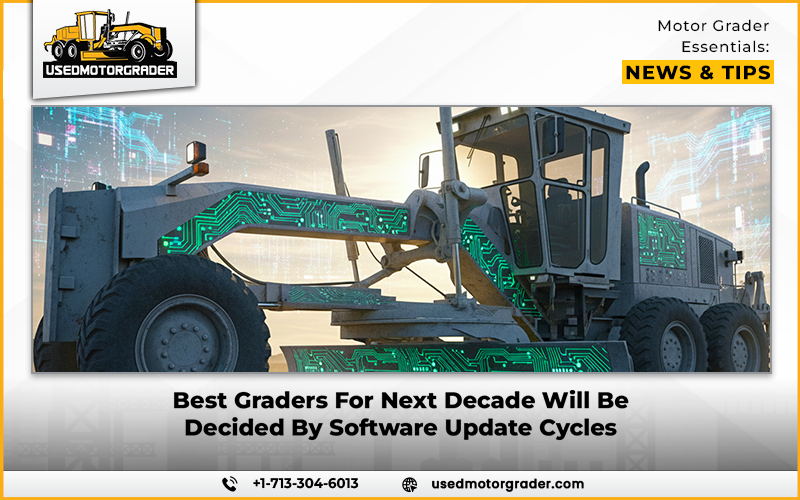
In the next decade, software ecosystems that deliver superior performance, over-the-air (OTA) features, and seamless integration into digital workflows will make certain motor graders the most successful.
Machines are becoming platforms with new capabilities long after they have left the showroom. With advanced grade control, predictive analytics, and connected telematics. The competitive edge is no longer pure iron but software architecture. Where the value is determined by update policies and ecosystem longevity.
The Replacement of Mechanical Performance by Software-Based Capabilities
While mechanical engineering breakthroughs once dominated the field, motor graders now rely heavily on embedded software to unlock productivity.
- OEMs are incorporating sophisticated automation and grade control systems into their machines.
- John Deere’s SmartGrade system, utilizing GNSS, automated blade control, and remote support, exemplifies this shift.
- It transforms the grader into a data-driven powerhouse where digital inputs direct mechanical outputs.
- Machine capabilities are being redefined by software and connectivity, and older platforms are being digitally upgraded to improve their capabilities.
Grade control and automation systems greatly minimize rework, improve accuracy, and sharpen pass consistency, features that have always been provided by skilled operators. Software refinement and calibration, rather than iron strength, deliver these results, effectively shifting performance from hydraulics to algorithms.
How OEM Software Ecosystems are Structured
Large OEMs have realized that machine value now revolves around telematics and software ecosystems. Firms such as Caterpillar, John Deere, Komatsu, and Volvo are investing in machine control software, telematics platforms, and connectivity solutions that update performance features, diagnostics, and fleet insights over time.
- Caterpillar’s VisionLink, Komatsu’s Intelligent Machine Control (IMC), and Deere’s integrated SmartGrade and remote support show how OEM ecosystems package control software, automation, and OTA connectivity to deliver a next-generation user experience.
- These systems enable remote updates, machine monitoring, and fleet optimization.
- All software-based services increase machine usefulness and minimize operational inefficiencies.
Telematics data in the industry also indicates a steep increase in connected equipment. With millions of OEM-installed devices reporting real-time data. This interconnected base provides the foundation for OTA updates and predictive maintenance, features modern contractors increasingly expect.
Frequency of Updates, Roadmap Longevity & Backward Compatibility
The strategy of software updates is important. Manufacturers provide long-term update roadmaps and regular support to make machines more future-proof, while old or stagnant architectures can quickly become obsolete.
- In other advanced technology industries, regular OTA updates have been shown to increase device lifecycles significantly.
- OTA-based solutions enable OEMs to deploy new machine control capabilities, safety improvements, and performance optimization without any physical interventions.
- This means machines purchased today can gain valuable functional additions years into their lifespan, provided the OEM maintains active software support.
In the absence of such an ecosystem, even mechanically superb graders may find themselves in a dead end as rivals use data, connectivity, and remote optimization tools to enhance real-world jobsite results.
Improving Performance with Field-Tested Software
We already see clear evidence of software-driven performance improvements across the industry.
- High-grade control systems and telematics have minimized grading passes, enhanced accuracy, and assisted fleets in optimization.
- The combination of 3D grading systems and GNSS data can reduce rework expenses and offer more stringent tolerances than conventional systems.
- Telematics allows remote diagnostics, which saves on downtime and field service expenses.
- OEMs are able to implement updates to refine subsystem behavior, fix software bugs, or refine control logic.
This has a direct impact on uptime and productivity, a digitally-driven performance aspect that mechanical upgrades cannot replicate.
Why Software Ecosystems are Customer Retention and Resale Value Drivers
Software ecosystems generate sticky value. Machines are becoming more and more of a subscription platform to contractors and fleet managers. With continuous updates and analytics providing a continuous payback.
This is redefining the resale of the best motor graders since machines that have active software support and connectivity tend to fetch higher prices in second-hand markets. Keeping a machine up to date makes it more relevant and more appealing to second-hand buyers who value the ability to upgrade performance instead of relying on fixed hardware. Even the most mechanically strong machines lose their value without constant upgrades in a market environment.
Software Policies and TCO Brand Differentiation
The policy of OEM updates varies greatly. There are those brands that have OTA updates and telematics with long-term subscriptions. Also, others that can require access fees or restrict functionality after a specified duration. This has an impact on the total cost of ownership (TCO) and technology obsolescence risk.
A rich, long-term software roadmap automatically makes a machine more valuable than one limited to older firmware that will not receive future updates. When contractors are deciding on the best motor graders that fit their operational strategy, they need to consider not only horsepower and build quality but also software support horizon.
Industry Voices: Contractors Focusing on Software
Contractor communities are moving towards more operational analytics, automation, and remote diagnostics rather than the conventional mechanical concerns.
- Improved software ecosystems have been appreciated to minimize variability among operators.
- Digital protection enhances safety measures.
- Automation of repetitive processes decreases the threshold to precision work.
Contractors recognize that software improvements can deliver real jobsite benefits that mechanical specifications alone cannot achieve. Mechanical durability is still significant, but it is no longer the sole determinant of machine efficiency.
Predictive Maintenance, OTA, and AI as Core Architecture
The use of advanced software features like AI-based grading support, predictive maintenance, and cloud-based diagnostic ecosystems is becoming a key differentiator. The OTA capabilities will allow machines to be flexible to the changing job site needs, regulatory conditions, and combined construction processes.
Unplanned downtime is already decreasing. Lifecycle outcomes are improving through remote diagnostics and machine learning models that predict maintenance needs. With these capabilities becoming more mature, the dependence on OTA and constant software updates will continue to increase. Software architecture will become the key determinant of the best motor graders of the next decade.
Tags: Best Motor Graders 2026, Construction Equipment Software, Used Motor Graders for Sale in USA