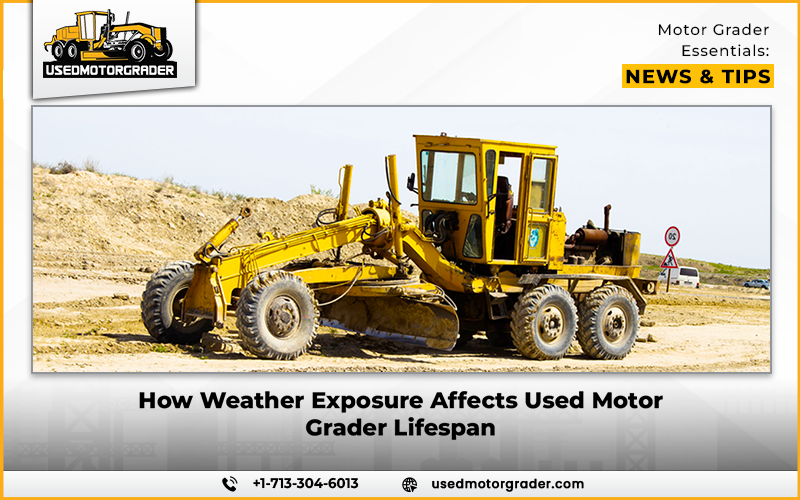
In construction, road maintenance, and earthmoving projects, motor graders are essential tools. Instead of being a piece of equipment you use and replace, they are a long-term investment due to their precision grading capability. However, consumers frequently see that two graders with comparable operation hours may operate entirely differently. One remains dependable, whereas the other begins to break down too soon.
The amount of weather they were exposed to, rather than just how they were utilized, is typically what makes a difference.
When purchasing or maintaining used heavy equipment motor graders, it is necessary to understand the impact of climate on lifespan. Let’s discuss in detail, how weather exposure affects used motor grader lifespan and weather specific maintenance strategies.
What Determines a Motor Grader’s Lifespan?
The average lifespan of a well-maintained motor grader is between 12,000 and 20,000 operating hours, or around 15 to 20 years. While used machines already bear the scars of the conditions they have previously operated in, new graders begin with fresh components and strict tolerances.
The longevity of used heavy equipment motor graders is mostly determined by three factors: the machine’s level of effort, the level of maintenance discipline, and the type of environmental exposure it received. It is simple to keep track of hours worked and service records. However, environmental stress precisely amplifies wear and affects how long vital components remain dependable.
Direct Weather Impacts on Motor Graders
Heat and Sunlight Exposure
Cooling systems and engines are constantly drained by high temperatures. Overheating is more likely because hydraulic systems, hoses, and radiators must work harder to maintain control. According to studies, hydraulic oil can collapse up to 30% more quickly under conditions that are continuously heated.
Another layer of harm is added by sunlight. Paint fades, plastic panels break, and electrical insulation is weakened by UV radiation. It may not be apparent to you right away, but every day the equipment is exposed to the sun.
Cold Weather and Freezing Conditions
Different issues arise in cold climates. Metal parts shrink, engines struggle to start, and hydraulic fluids thicken and become slow. Batteries lose efficiency quickly; in freezing temperatures, they can provide up to 40% less cranking power.
All types of mechanical stress are increased by frequent cold starts. Rubber hoses and seals dry out and crack over time. Over the course of the winter, it becomes a slow and steady process.
Rain, Humidity, and Moisture
Among all environmental factors, moisture may be the most damaging. High humidity and constant rain promote corrosion on undercarriages, frames, and blades. Water can cause uncertain failures that are difficult to spot when it slides into electrical systems and bearings.
As components alternate between damp and dry states, extended wet periods encourage metal fatigue. This fails structural integrity from the inside out, causing damage that won’t be apparent until it has progressed.
Wind, Dust, and Storms
Particles are forced into filters, joints, and moving parts in dusty situations. This accelerates wear on hydraulic systems, bushings, and pins by increasing friction. Dust penetration is amplified by strong winds.
Storms can result in direct physical harm or prolong periods of inactivity for machinery. People typically overlook the fact that storm-exposed idle machines frequently generate moisture inside their systems, which advances corrosion even when they are not operating.
Hidden Weather-Related Aging Mechanisms
Since internal climate damage is invisible, it is simple to overlook. Over time, thermal cycling, in which components regularly expand and contract, weakens fasteners and puts stress on welds. Underneath the paint, rust is accelerated by heat and moisture, remaining undetectable until the damage is severe.
Despite having excellent service records, some used heavy equipment motor graders fail earlier than anticipated, which can be explained by these hidden processes. Damage caused by the climate is not recorded in a maintenance journal.
Signs Weather Is Shortening Your Grader’s Lifespan
Environmental harm is frequently indicated by obvious warning signs:
- Rust that appears prematurely where it shouldn’t
- Hydraulic leaks that keep happening
- Overheating
- Regular battery malfunctions
- Electrical issues that occasionally occur
Early detection of these indications enables you to take action before little problems turn into expensive fixes.
Weather-Specific Maintenance Strategies
For Hot Climates
Regular fluid examinations are necessary in hot climates. Regularly clean cooling systems and keep a careful eye on hydraulic oils. UV-resistant coatings, reflecting covers, and shaded parking greatly lessen heat and sun damage.
For Cold Weather
Block heaters, battery warmers, and winter-grade oils are necessary for cold-weather operation. Hoses and seals are protected by insulated storage. Instead of simply turning it on and expecting it to function, controlled warm-up procedures minimize mechanical stress during starts.
For Wet and Humid Environments
Rust-proofing coatings and anti-corrosion sprays are essential in humid environments. Moisture-related failures are avoided by routine electrical inspections and daily cleaning following exposure to rain. Whenever the used heavy equipment motor graders are utilized in damp areas, these actions really increase their reliability.
Bottom Line: Weather Matters More Than You Think
An important factor in determining how long a motor grader remains productive is weather exposure. Dust, wetness, heat, and cold all have long-lasting effects that build up over time.
Machine life can be considerably increased by implementing weather-specific maintenance techniques and comprehending climate history. Examine environmental exposure, hours worked, and maintenance records prior to purchasing or maintaining used heavy equipment motor graders.
This realization frequently decides whether a grader turns into a trustworthy resource or an expensive lesson you wish you had avoided.
Tags: Best Motor Graders in USA, Best Motor Graders 2026, Buying Used Motor Graders Tips