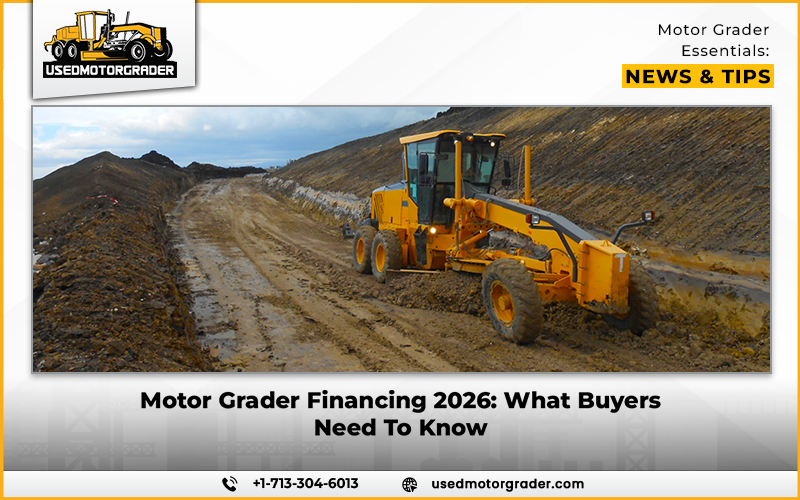
In 2026, intelligent financing is more important than horsepower and blade control when purchasing a motor grader. The way you finance your grader can have a direct impact on your cash flow, tax savings, and bidding power because equipment costs are still high and project deadlines are getting closer. This year, contractors will be facing both possibilities and threats due to changes in tax laws, interest rate trends, and lender competition.
While alternative lenders and equipment finance companies typically offer more practical alternatives for used motor graders for sale, dealer and OEM financing programs are particularly appealing for new motor graders, frequently giving promotional rates or bundled service packages. Let’s take a closer look.
Why 2026 Is Different For Motor Grader Financing
Recent statistics from the Equipment Leasing and Loan Association (ELFA), which Reuters reported, indicates that U.S. equipment loan originations grew significantly as 2026 approached, a sign of both good contractor demand and lender confidence. This is important because borrowers benefit from better rates and structures when lenders compete.
For inventory movement, OEMs are also promoting promotional financing. It is common for manufacturers to provide bundled maintenance packages or seasonal discounts. Over a five-year period, this may save thousands of dollars of contractors looking to buy a new grader. Regional roadwork projects and infrastructure spending, meanwhile, keep increasing demand. Financing options are more flexible than they were two years ago, whether you are looking to grow your fleet or find a used motor grader for sale.
Motor Grader Financing Options Explained
Bank Loans / Credit Unions: Ideal for seasoned contractors with solid finances. Although underwriting is slower and more strict, rates are competitive.
Dealer & OEM Financing: Quick and easy. frequently consists of service bundles or promotional APRs. ideal for new purchases that are dependent on manufacturer assistance.
Operating Lease vs Capital Lease vs Conditional Sale: Operating leases may offer off-balance-sheet treatment while also conserving cash. Conditional sales and capital leases encourage ownership and gradually increase equity.
Equipment Finance Companies / Online Lenders: Flexible approvals are especially beneficial for small and medium-sized businesses. quicker processing, but at a little higher rate.
Private-Party Purchases: Lenders could demand certified hour logs and inspection reports if you are purchasing from a private seller or auction. There is greater attention when refinancing older equipment.
How Motor Grader Financing Works
- Prepare The Following Documents: Tax returns, bank statements, the last two years’ worth of financial statements, and machine details (make, model, year, and hours).
- Submit Application: Apply, and the lender will examine your company’s stability, cash flow, and credit history.
- Underwriting Review: The equipment’s age and condition have an effect on the loan-to-value ratio.
- Funding and Approval: Term durations typically range from 36 to 72 months. Down payments usually range from 10% to 20%, depending on the level of risk.
If you are considering purchasing a used motor grader for sale, be prepared for lenders to place a greater importance on service records and resale value.
What Lenders Care About in 2026
Lenders are increasingly looking at equipment usage and cash flow coverage ratios in addition to credit scores. Applications can now be strengthened by telematics data, such as idle time, fuel economy, and hour-meter recordings.
For instance, displaying this utilization data could strengthen residual assumptions if your grader averages 120 billable hours per month across city contracts. In the field of equipment finance, this is a developing but little-known trend. Time is still important in business. In general, contractors that have been in business for more than three years get better terms.
Unique Strategies Smart Buyers Use
Telematics-Enabled Financing
By offering validated usage data, risk is decreased. Seasonal payment arrangements based on utilization cycles are even structured by some lenders.
Sale-Leaseback
Do you own outdated equipment completely? In order to release working capital without sacrificing operational control, sell it to a finance business and lease it back.
Bundle Everything
Instead of taking out separate loans, finance delivery, GPS systems, accessories, and extended warranties all at once.
Rate Arbitrage Strategy
Once cash flow stabilizes, use short-term OEM promotional financing before refinancing into a longer structure.
Tax & Accounting Considerations
By enabling firms to deduct a sizable amount, sometimes the whole purchase price of qualified equipment in the first year, Section 179 expense and bonus depreciation provisions continue to favor equipment buyers in terms of tax treatment in 2026.
For example: A $250,000 grader with a 15% down payment might provide significant tax benefits in the first year, increasing the return on investment after taxes. Instead of depreciation benefits, leasing may provide deductible payments.
A CPA should always be consulted before finalizing the framework. The total cost of ownership might change significantly with the appropriate election.
Used Motor Graders Special Financing Rules
Machines under ten years old and below specific hour limitations are usually preferred by lenders. Larger down payments are frequently associated with higher hours.
When looking through a used motor grader for sale, get ready:
- Complete maintenance records
- Report of an independent inspection
- Verified hour meter’s reading
- Clear title documents
These accelerate approvals and reduce lender hesitancy.
Hidden Costs & Negotiation Points
Don’t focus only on APR. Consider:
- Insurance requirements
- Administrative or documentation fees
- Prepayment penalties
- GAP insurance responsibility
- Total interest paid over life of loan
Negotiating term length can reduce total cost. A longer loan lowers monthly payments but increases total interest.
Quick Lender Comparison Snapshot
| Lender Type | Ideal Buyer | Speed | Typical Term | Pros | Cons |
| Bank | Established firms | Moderate | 48–72 mo | Low rates | Strict criteria |
| OEM/Dealer | New buyers | Fast | 36–60 mo | Promo deals | Limited flexibility |
| Finance Co. | Small/mid firms | Very fast | 36–72 mo | Flexible | Slightly higher cost |
| Private-Party Finance | Auction buyers | Moderate | 36–60 mo | Asset flexibility | Extra inspection |
Final Thoughts
Equipment financing activity has remained strong entering 2026, which means qualified contractors and fleet owners are seeing more competitive lending options and flexible structures than in previous slower cycles. At the same time, current tax rules allow favorable expensing benefits, enabling businesses to potentially deduct a significant portion of equipment costs and reduce their after-tax burden.
Whether you are expanding operations or evaluating a Used Motor Grader For Sale, financing strategy should match your cash flow, tax position, and project pipeline. Prepare documents early, compare at least three offers, and consult your accountant before signing.
The right financing decision today can protect your margins tomorrow.
FAQ’s
Can I finance a grader older than 10 years?
Yes, but expect higher down payments and shorter terms.
Can attachments be financed?
Yes, most lenders allow bundled financing.
How much down payment is typical?
Usually 10–20%, depending on credit and equipment age.
Is leasing better than buying?
Leasing helps cash flow; buying builds equity and tax depreciation.
Does telematics data really help approvals?
Increasingly yes, as lenders use utilization data for risk assessment.
Tags: Financing Options For Graders, Heavy Equipment Financing, Motor Grader Buyers Houston