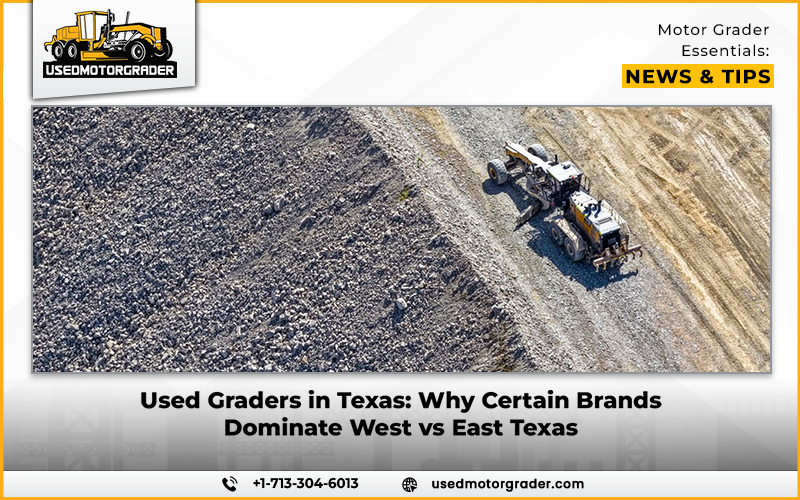
An interesting fact soon strikes when contractors look to buy used motor graders in Texas: depending on which side of the state you are operating in, brand preferences vary accordingly between contractors in West Texas and those in East Texas. This difference cannot be explained by marketing and brand loyalty alone. The terrain, haul distances, climate, and operator familiarity all contribute to what is best in each area. Knowing these distinctions enables the buyer to make more intelligent, more practical decisions regarding equipment.
Regional Buying Patterns in Texas
Texas is so big that there is no such thing as a “best” grader. What works well on broad, open West Texas jobs might be too big or too inefficient on smaller East Texas jobs. The major factors that affect regional taste are:
- Soil moisture and ground conditions used by motor graders in Texas tend to search within their specific region rather than conditions.
- Average project scope and layout.
- Mobilization distances between work areas.
- Background and training history of the operator.
- Dealer and service coverage.
These are the reasons why contractors who purchase used motor graders in Texas tend to search within their specific region rather than across the entire state.
Understanding West Texas Jobsite Conditions
West Texas projects are typically large-scale. Roads, energy corridors, and large infrastructure sites dominate the workload, and operators frequently run the machines for long shifts without breaks. The major environmental factors are:
- Rolling to flat terrain with long grading runs.
- Hard-packed soil, caliche, and abrasive ground.
- Big construction sites with fewer space restrictions.
- Extended working hours at constant rates.
- Long passes require high stability.
These conditions are rewarding to graders who are stable, durable, and comfortable in long production cycles.
Why Certain Brands Perform Better in West Texas
Since the employment in West Texas is conducive to long production rather than maneuvering, contractors are inclined to turn to graders designed to be powerful and long-lasting. Brands like Caterpillar (specifically the 140H and M-Series) often dominate here due to their heavy frames and reliability in remote areas like Midland or Odessa. The drivers of brand preference in West Texas are:
- High horsepower for heavy grading runs.
- Powerful drive trains that have long duty cycles.
- Higher working and travelling speed stability.
- Mechanical simplicity that is conducive to distant places.
- Extensive experience with old models.
In the case of many fleets, uptime and consistency are the objectives, and not state-of-the-art features. This attitude has a very strong impact on the way contractors Buy Used Motor Graders in Texas, particularly in the western parts.
East Texas Terrain and Project Characteristics
East Texas is another story. Jobsites are typically smaller, wetter, and more complex, which demand more frequent adjustments and control. Common East Texas issues are:
- Soft, moisture-heavy soils.
- Thick vegetation and small working areas.
- Reduced haulage distance between tasks.
- Frequent change of blades and fine-tuning.
- Increased drainage and finish grading.
Under such circumstances, brute force is less important than delicacy and responsiveness.
Why Different Brands Dominate East Texas
The graders preferred in East Texas tend to be hydraulically controlled and maneuverable, as opposed to large. Brands like John Deere and Case are frequently favored in markets like Tyler or Lufkin for their precise “Grade Pro” controls and agility in tighter rights-of-way. East Texas brand preference drivers are:
- Smooth, responsive hydraulics.
- Good traction on wet roads.
- Steering and articulation that fit in tight places.
- Comfort of operators in stop-and-go grading.
- Experience in finishing and slope work.
The contractors in this area usually focus on the ability of an operator to adjust to the changing conditions of the ground.
Operator Familiarity and Regional Training Influence
The experience of operators strengthens regional preferences. Most operators are trained on brands they will continue to operate with throughout their careers, and local hiring conditions can be reflected in fleets. Influence factors include:
- Local fleets are developing initial operator experience.
- Crew training on familiar platforms by contractors.
- Standardization of counties and municipalities.
- Quick hiring where machines fit the skill sets of the operators.
- Lower training costs due to recognizable control layouts.
When you buy used motor graders in Texas, contractors tend to choose the machines their crews are familiar with, which saves time and reduces errors.
Maintenance Access and Dealer Support by Region
Support infrastructure also influences brand dominance. West Texas operations value graders that run longer between service intervals, while East Texas contractors appreciate closer dealer networks. Considerations of regional support are:
- The density of dealers around population centers.
- Spare parts for older machines.
- Remote area field service access.
- Turnaround time and its effect on schedules.
- Local mechanic’s knowledge of particular brands.
These facts not only affect what is purchased, but also the duration of machine service.
Used Market Availability and Pricing Trends
These regional needs are reflected in the used grader market. The West Texas listings have heavier-duty machines, whereas East Texas markets favor mid-sized models designed for maneuverability and finish work. The market observations are:
- A higher concentration of large graders in western regions.
- More maneuverable models in the eastern markets.
- Local demand-based pricing and not statewide averages.
- Quicker resale of machines that are in line with regional expectations.
- High value retention with operator demand high.
The Texas Buyers of Used Motor Graders tend to find better value when they match their purchases with local demand trends.
What Buyers Should Consider Before Purchasing
The selection of the appropriate grader in Texas is not so much about brand prestige as it is about the job site fit. Purchase suggestions are:
- Grader size and design to match the local ground.
- Consider familiarity with the operator and then the brand.
- Assess the accessibility of dealers and parts in your location.
- Do not purchase more horsepower than is needed in a limited area.
- Take into account resale value in the same region.
These are some of the considerations that will make sure the grader does not work against your projects but rather works in their favor.
Regional Fit Matters More Than Brand Reputation
The difference in the preferences between West Texas and East Texas graders brings out a significant fact: the success of equipment is context-dependent. The nature of the terrain, the distance covered by hauls, habits of the operators, and access to services all determine which brands prevail in each region. When contractors Buy of Used Motor Graders in Texas, consider these regional factors, contractors are likely to achieve higher productivity, reduced operating stress, and better long-term value.
FAQs
1. Why do West Texas contractors prefer heavier motor graders?
A: Contractors prefer machines that deliver power, stability, and long working hours on large job sites, long grading runs, and abrasive soil.
2. Are the same used motor graders effective in both regions?
A: Some models perform well across a wide range of conditions, but most suit specific terrain or particular project types best.
3. Does operator familiarity affect resale value in Texas?
A: Yes. The machines that are familiar to the operators tend to sell more quickly and hold a higher value in that specific region.
4. Should buyers source used graders locally or statewide?
A: Local sourcing is often more in line with regional requirements, service support, and operator familiarity, even if statewide alternatives seem less expensive at first.
Tags: budget motor graders, best used motor graders 2025, CAT 12H motor grader