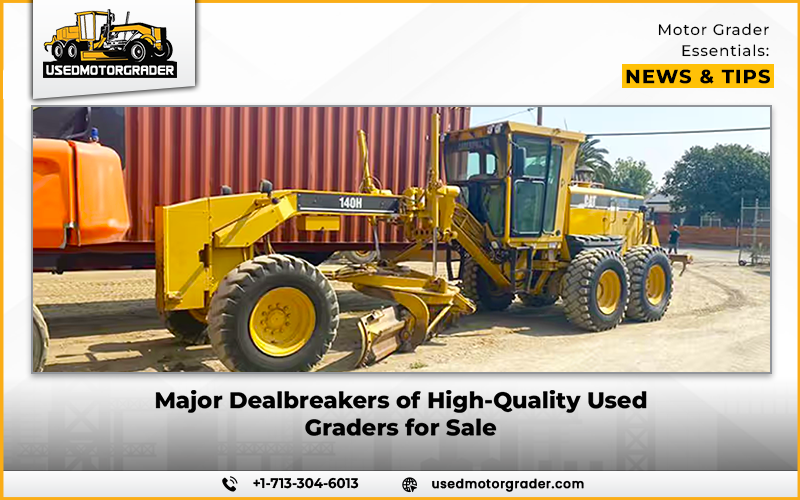
Buyers often find high-quality used graders for sale while browsing sale ads and feel impressed by the clean paint, shiny tires, and well-written descriptions. Nevertheless, a glossy surface does not necessarily imply that what resides inside is equally sound. So-called high-quality graders can harbor severe problems that may cost consumers much more over time than they would by buying one immediately. Being aware of what to watch out for is one thing that will save you an unnecessary cost.
Frame and Structural Issues: The Hidden Damage Beneath the Paint
The backbone of the grader is the frame. Any structural malformation or damage would lead to faulty grading and performance. Several vices are concealed, making them not noticeable until you peek.
Structural dealbreakers may be of the following kinds:
- Weld or cracking around the articulation joint – can be due to considerable stress or previous accidents.
- Frame members that are bent or corroded may cause alignment and stability problems.
- Uneven wear on the machine indicates that it could have been misused.
- Rust in carrying members, particularly in places of mounting and linking of blades.
A structurally impaired grader can never match the accuracy and safety of one built with a sound frame.
Powertrain Problems: The Costliest Red Flags
Any grader is about the engine and the transmission. Should either of the systems display signs of wear or damage, the repairs can only take a short time to surpass the value of the machine.
Be careful of the following expensive red flags:
- High engine blow-by or blue exhaust smoke is the sign of damaged piston rings or internal abuse.
- Delayed/slipping gear changes may indicate a problem in the transmission or clutch.
- Leaks around seals, a clue that parts are almost on their deathbeds.
- Weak load power, exhibited by poor compression or a faulty fuel system.
A brief test run can reveal these issues, so buyers should always insist on one before finalizing a deal.
Circle and Moldboard Wear: The True Test of Precision
Although the powertrain might be smooth, it is the circle and the moldboard that define whether a grader will be able to perform its duties and do it correctly. A loose or worn circular drive can cause uneven grading and fuel wastage.
Inspect for:
- Jostling or slackness in the circle drive gears or pinion gears.
- Worn slide rails that do not allow smooth movement of the blades.
- Leaks of hydraulic fluid around the circle turn motor.
- Lift cylinders that have been seized or rusted, making the blade unresponsive.
Performance-focused buyers see them as deal breakers, and no amount of cosmetic repair can make up for worn grading components.
Hydraulic System Leaks and Weaknesses
Contemporary graders rely on hydraulics to be precise and easy to use. In cases of failure of these systems, the level of productivity falls significantly.
Check for warning signs like:
- Jerky or delayed cylinder responses due to internal hydraulic wear.
- Stained or dirty hydraulic fluid, which is usually a consequence of moisture or dirt.
- Hose leaks, fittings, or valve leaks indicate poor maintenance.
- Abnormal pump sound, such as cavitation or low pressure.
Overhauling hydraulic systems costs a lot, so technicians should treat any noticeable leak or unusual reaction as a serious warning.
Electrical and Control System Failures
The electrical and electronic control systems in newer graders control all the aspects of blade movement through diagnostics. Regrettably, these systems are a subject of neglect by sellers.
Key dealbreakers include:
- Fault codes that cannot be cleared upon a reset.
- Sensors or modules that periodically malfunction during use.
- Slow leverage on control levers or joysticks that do not respond.
- A wire that is corroded or exposed can cause the machine to behave in an unpredictable way.
Electrical problems may prove to be annoying to troubleshoot and fix, and might need expensive technicians or modules.
Cab, Operator Comfort, and Instrumentation
While comfort may seem secondary to mechanical condition, a neglected cab can signal poor overall maintenance.
Check for:
- Lit-up lights or non-functioning gauges may conceal underlying issues.
- Seats or controls that are damaged, showing hard use.
- Poor visibility or HVAC malfunction affecting operator safety and comfort.
Comfortable operators work more productively, and machines with neglected cabs usually show poor maintenance in other areas as well.
Misleading Service History or Incomplete Maintenance Records
An accurate record of service is, perhaps, the surest indicator of a well-maintained grader. In the event of missing or uncertain records on the same, then take care.
Dealbreakers include:
- Lack or missing oil change, inspection, or rebuild logs.
- No history of fluid tests, which are used to identify early wear.
- Lack of a record of rebuilding important parts after many hours of operation.
A grader without service proof is a gamble on its own, and, in the majority of cases, it is not a gamble worth taking.
Price Too Good to Be True: The Final Warning Sign
When a listing appears lower than market averages, it is practically always because of a cause.
Watch for these red flags:
- Serial numbers or ownership have ot verified.
- Denial of third-party inspection.
- New paint on the welding spots or damage.
A purchase that is too low may just be a second purchase, one to get a machine and one to get the repairs.
Smart Buying Means Knowing When to Walk Away
Even the best High-Quality Used Graders For Sale may become expensive headaches in case of the unidentified key red flags. Spend time checking all details, service records, and checking up with known good mechanics. A really dependable grader is not merely eye-catching; it works and works, is cheaper to service, and is productive over a lifetime.
FAQs
1. What’s the biggest red flag when inspecting used graders?
A: Large frame cracks or weld repairs at the articulation point are major dealbreakers as they influence the safety and performance.
2. How can I verify if a used grader’s service history is genuine?
A: Request service records or dealer maintenance records. Verify component rebuild date/SN.
3. Are hydraulic leaks always a dealbreaker?
A: Technicians can repair small leaks, but large or frequent leaks indicate missed maintenance or aging seals throughout the system.
4. Why are some High-Quality Used Graders for Sale so cheap online?
A: The cheap prices may reflect the presence of latent issues, lack of ownership documentation, or significant repairs rapidly covered with cosmetic paints. Never purchase without a check.
Tags: Caterpillar 140M, Caterpillar motor grader for road work, construction equipment comparison, construction equipment performance