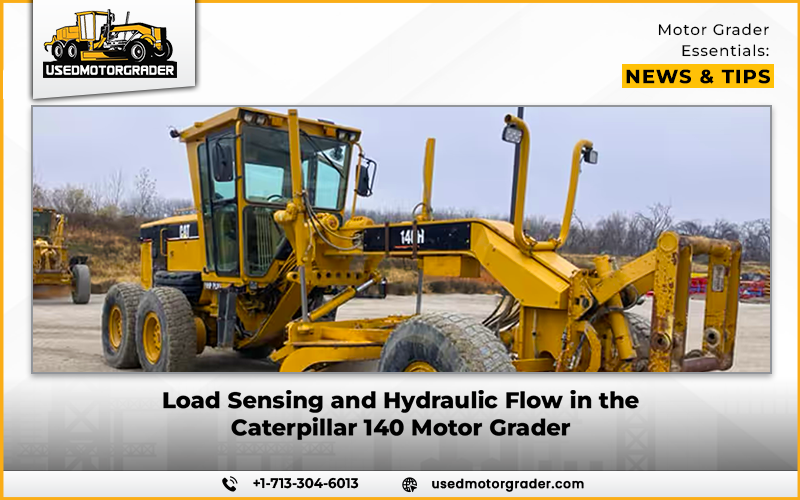
The role of hydraulics in the performance of the grader is much larger than some people think. For contractors who maintain or operate the Caterpillar 140 Motor Grader, knowledge of its load-sensing hydraulic system can make a huge difference in productivity and efficiency. It is not merely a technical aspect of this system, but the reason why the machine has such smooth blade control, reactive steering, and reliable performance even in harsh environments. And be it hard-packed soil you are cutting or fine-grading a crown, the hydraulic capabilities of the 140 are what make it one of the most relied-on graders on the market.
Understanding Load-Sensing Hydraulics in the Caterpillar 140
One of the distinguishing technologies that makes modern graders superior to older hydraulic models is load-sensing. Simply put, the system constantly checks the pressure requirements of the blade, steering, circle, and articulation. The pump does not use its full power continuously but only supplies the system with the amount of power required at any particular time.
This saves on the engine strains, fuel usage, and the entire machine becomes more responsive. In the case of the Caterpillar 140 Motor Grader, this gives the operator greater control in multi-function work, which is important when fine-grading or working in tight jobsite conditions.
Core Components of the 140’s Hydraulic Architecture
The hydraulic system consists of well-coordinated components that enable quick reaction and a steady power supply. These include:
- Variable-displacement hydraulic pump.
- Pressure-demand load-sensing valves.
- Steering and braking priority-flow valves.
- Electronic control sensors are linked to the ECU of the machine.
All the components are integrated to make the grader responsive to operator inputs, even when loaded heavily.
How Load Sensing Enhances Blade Control
The Caterpillar 140 Motor Grader has one of the best-selling points because of its load sensing, which makes the blade control smooth and predictable.
Major effects on grading accuracy:
- Easy feathering of material.
- Consistent power when cutting heavily.
- Better responsiveness when used in finish-grade applications.
Since the system automatically regulates pressure, operators can have a trustworthy performance even when operating the system with several controls simultaneously—lifting the blade, turning the circle, and articulation the machine. This also aids in minimizing the fatigue of the operator, particularly when working on long shifts.
Hydraulic Flow Distribution: Where the Power Goes
Smart flow distribution is another significant benefit of load-sensing hydraulics. The priority is always given to steering and braking, which makes it safe in any circumstances. Further flow is allocated to:
- Blade lift and tilt
- Circle rotation
- Moldboard side shift
- Articulation and wheel lean
The sentence is already in active voice. Here’s a cleaner active version:
When the ground resistance suddenly rises, for example, when cutting hard clay, the system instantly raises hydraulic pressure where needed. This holds the blade in place and minimizes the stalling that occurs in older machines.
Fuel Efficiency Gains Through Load-Sensing Technology
Fuel efficiency directly depends on hydraulic efficiency. Three things are the most significant in the 140:
- The pump provides just the necessary pressure.
- Less strain on the engine when performing light work.
- Reduced hydraulic heat, that is, reduced cooling requirements.
All these enhancements minimize the fuel consumption and increase the life of the component, which results in reduced ownership costs in the long term.
Operational Advantages for Different Job Types
The load-sensing system is advantageous for different tasks in a variety of ways:
- Road maintenance: Smooth control in long and light passes.
- Heavy cutting: The motor responds immediately when the load is increased.
- Slope shaping: Unbelievable fine control over contouring.
- Snow clearing: Rapid reaction to unexpected material variations.
Municipal, construction, and mining sectors have embraced the Caterpillar 140 Motor Grader because they have found the machine to be consistently reliable in all these settings.
Common Misconceptions About Hydraulic Systems
Some myths remain concerning grader hydraulics, including:
- Better performance is always associated with more hydraulic flow.
- Load-sensing systems eliminate operator control.
- Hydraulic lag cannot be avoided.
These ideas are refuted by modern systems, particularly in the Caterpillar 140 Motor Grader. Load sensing, in fact, enhances operator control, and the advanced design of the pump does away with the lag that the older machines were experiencing.
Maintenance Practices That Make or Break Hydraulic Performance
Hydraulic systems are very powerful, yet sensitive. To retain them at their optimum level of performance, concentrate on:
- Frequent pump response tests.
- Maintaining the hydraulic fluid clean and filtered.
- Checking hoses, seals, and fittings against leaks.
- Making electronic control modules up to date as needed.
Failure to maintain hydraulic systems may result in performance loss way before a significant failure.
Comparing the 140’s Hydraulics to Other Motor Graders
The 140 is reputed in the industry to be hydraulically smooth and fast. It has greater multi-function blade control, quicker pump response, and joystick feedback that is easier to use by the operator than competing graders. This is one of the reasons why the 140 is among the most admired graders in the world.
How Operators Can Maximize Hydraulic Potential
Good technique contributes to the maximum output of the hydraulic system:
- Keep the joystick grip relaxed and steady.
- Do not use sudden movements of the blade.
- Maintain engine RPM in optimum power band.
- Automation features should be used where necessary.
Even an excellent hydraulic system will work better with the same operator habits.
Summary of Hydraulic System Value
One of the strengths of the Caterpillar 140 Motor Grader is the load-sensing hydraulic system. It not only increases accuracy and productivity but also reduces the cost of operation and increases the comfort of the operator. The 140 remains a stable reference point to the contractors who prefer uniformity in their performance on all types of jobs.
FAQs
1. How does load sensing affect long-term maintenance needs?
A: It lessens the load on the pump and engine, which may lengthen the life of the components when combined with adequate fluid and seal maintenance.
2. Is the hydraulic system difficult to troubleshoot?
A: Not typically. The onboard monitoring system and pressure testing of the machine can diagnose most of the problems.
3. Does load sensing improve fuel efficiency?
A: Yes. The pump burns less fuel on light operations since it only generates the necessary pressure.
4. Can older grader operators easily adapt to the 140’s hydraulic system?
A: Absolutely. The user-friendly controls and the load-sensing system ease machine handling, even for operators accustomed to older machines.
Tags: used motor graders Houston, Cat 140g graders for sale, 2004 Caterpillar 140H, 2016 Caterpillar 140M3