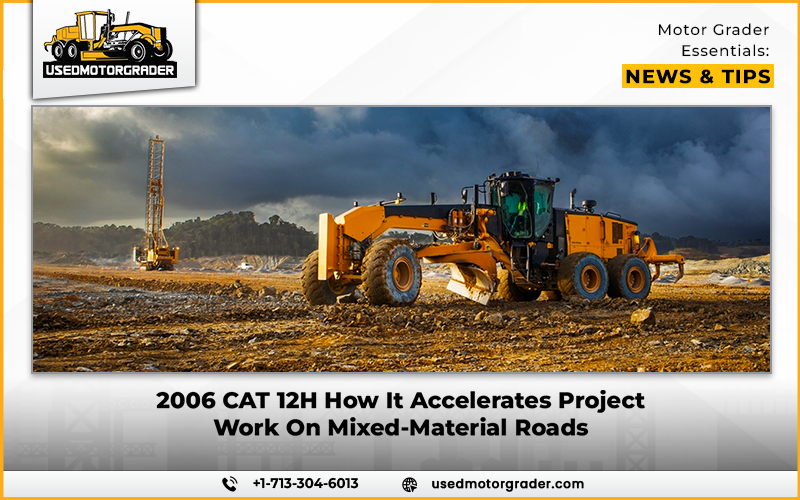
The 12H in Mixed-Material Roadwork
Speed and precision are all that matter when it comes to grading mixed-material roads. The 2006 Caterpillar 12H has gained a reputation for finishing projects more quickly while providing a high-quality finish. Unlike some modern graders solely powered by sheer horsepower or complex electronic overrides, the 12H relies on its efficient blade design and stable tandem axle setup. These features allow operators to make fewer passes over gravel, sand, and clay surfaces, saving both time and fuel, a combination that contractors appreciate on large-scale infrastructure projects.
Key Features of the 2006 Caterpillar 12H
The 12H is designed to be balanced and durable. Key specifications include:
- Cat 3306 Engine: A field-proven engine that offers exceptional lugging performance and fuel efficiency.
- Engine Power Management: Automatically adjusts horsepower (from 140 hp to 165 hp) based on the gear to maximize traction and reduce tire slip.
- Load-Sensing Hydraulics: Matches hydraulic flow and pressure to power demands, reducing heat and power consumption.
- Direct-Drive Power Shift Transmission: Provides a “feel” for the blade load that is essential for precision grading. The balance enables the 12H to be versatile and handle municipal roads, secondary highways, and mixed-material infrastructure projects with relative ease.
Blade Efficiency in Mixed-Material Grading
The 12H has one of the most impressive features in the form of its moldboard efficiency, enabling operators to finish grading tasks in fewer passes.
- The moldboard lifts and cuts materials effectively, even on hard-packed gravel.
- The roll-up of materials is optimized through an aggressive blade angle, which minimizes spillage and follow-up work.
- Accuracy in grade control is ensured across various surface types. A decrease in the number of passes leads directly to less fuel usage and reduced wear on tires and blade edges.
Tandem Axle Stability Advantages
Stability is critical when dealing with mixed-material roads, and the tandem axle design of the 12H offers a major mechanical benefit.
- Weight Distribution: Enhances traction on soft or uneven surfaces by spreading the machine’s weight over four rear wheels.
- Smoother Finish: The tandem design helps “bridge” small dips in the road, reducing bouncing and chatter for a more uniform surface.
- Locked-Up Drive: The tandem drive is a locked system ensuring all four wheels drive at all times, providing maximum pushing power. This stability is especially useful when dealing with stratified materials where uneven ground pressure can negatively affect the final grade.
Fewer Passes: Time and Fuel Savings
The 2006 Caterpillar 12H has one of the most visible advantages in the form of the number of passes needed to attain a quality finish.
- Optimal blade curvature reduces the need for repetitive corrective cuts.
- Fewer passes lower the total fuel consumption over the life of the project.
- Projects are completed faster without compromising the strict tolerances of the grade. The 12H can often perform as well on layered surfaces with less effort than some high-tech modern graders that rely more on sensors than mechanical balance.
Operator Experience and Productivity
The 12H is operator-oriented to ensure that comfort and control are not sacrificed for power.
- The cab features a redesigned layout with excellent visibility of the moldboard heel and tandem tires.
- Mixed-material adjustments are made easy with intuitive, low-effort controls.
- Proportional flow in the hydraulic system allows the operator to use several controls simultaneously without losing cylinder speed. A comfortable operator is a productive operator, and the design of the 12H is built around this ergonomic principle.
Performance on Gravel vs. Sand vs. Clay Roads
The 12H works on a wide range of surfaces and adapts its performance to the material at hand.
- Gravel: Cuts consistently to maintain the road’s crown and reduce loose material loss.
- Sand: The equal weight distribution provides necessary flotation and prevents deep rutting.
- Clay: Precise moldboard control allows for grading without over-compaction or surface cracking. The grader is fast to switch between material types, making it ideal for the varied terrain found in mixed-surface road projects.
Maintenance Considerations for Consistent Performance
Even a high-performance grader needs diligent care to maintain its efficiency.
- Axle and Blade Alignment: Regular checks prevent uneven wear and ensure the blade sits level.
- Tire Management: Keeping all four tandem tires at equal pressure and wear levels reduces strain on the drive axles and chains.
- Hydraulic System: Inspecting for leaks and maintaining fluid quality ensures the lift and articulation remain smooth. Routine care is the process that keeps the 12H providing rapid and effective grading throughout its service life.
Comparing the 2006 Caterpillar 12H to Contemporary Graders
Although newer graders may feature more electronics or higher peak horsepower, the 12H remains highly competitive in mixed-material work.
- In layered applications, its mechanical blade efficiency is often higher than that of newer, heavier machines.
- The tandem stability provides a more predictable and smoother pass for finishing work.
- It remains cost-effective for contractors due to lower initial purchase costs and simpler maintenance requirements. On many small to mid-sized projects, the 12H is faster and more economical than high-tech alternatives.
Why the 12H Still Excels in Mixed-Material Projects
The 2006 Caterpillar 12H demonstrates that superior blade design and tandem axle stability are paramount in ensuring a project is completed efficiently. The 12H provides practical time, fuel, and productivity benefits by minimizing passes, managing materials effectively, and keeping operators comfortable. Contractors managing mixed-material roads, from gravel to clay, will find that this mid-sized grader remains a reliable, cost-effective solution decades after its initial release.
FAQs
1. What makes the 2006 Caterpillar 12H faster on mixed-material roads?
A: Its moldboard efficiency and tandem axle stability minimize the number of passes required to achieve a finished grade, which directly saves time and fuel.
2. How does it handle different materials like sand, gravel, and clay?
A: The 12H adapts well by using its balanced weight for flotation in sand, its aggressive blade angle for consistent cutting in gravel, and precise hydraulic control for grading clay without over-compaction.
3. Is it better than modern graders for mixed-material projects?
A: While modern machines offer more electronic assists, the 12H is often more efficient and economical on layered surfaces due to its balanced mechanical design and lower operating costs.
4. What maintenance is key for consistent performance?
A: Maintaining tandem tire equality, checking blade and tandem alignment, and ensuring the load-sensing hydraulic system is free of leaks. These points are essential for maintaining the grader’s precision and productivity.
Tags: CAT 140H motor grader, Cat 140g graders for sale, Cat 140 Motor Grader For Sale