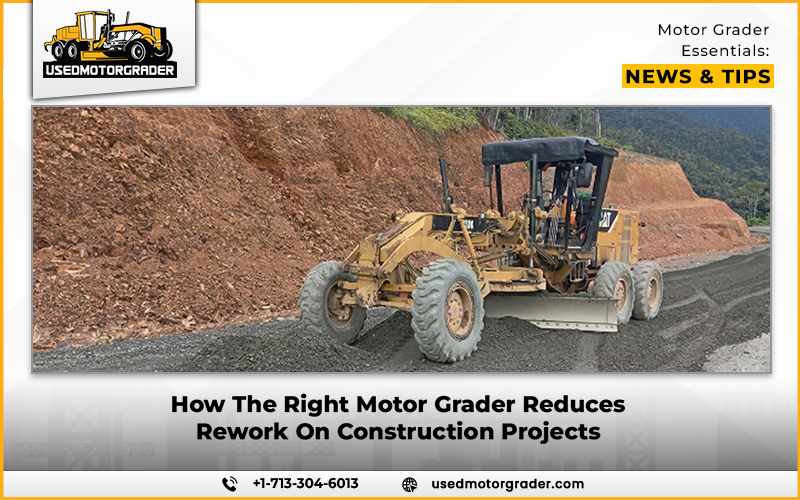
Precision is paramount during construction projects, from the very beginning, and one of the most crucial steps to ensure precision is grading. A poor grade will impact the entire process from foundation, drainage, paving, and end of project preparation. A single mistake on the grade can result in costly rework, project delays, material waste, and increased operating costs.
This is why it is important to make the right choice regarding the type of motor grader for sale that you are choosing, and it’s not just about the machine with the biggest horsepower or the lowest price. Contractors who purchase equipment that is appropriate to the project’s needs can achieve more accurate grading, greater productivity, and more efficient project completion. The right motor grader will assist the contractor to get the job done the first time right and help avoid unnecessary costs during the project.
Why Accurate Grading Matters
Good grading is the basis for a successful construction project. From roads, commercial sites, airports, to residential developments, each surface needs to be designed with exactitude before any other building process can commence.
Grading inaccuracies can cause contractors to have to rework or reshape the surface, adding or removing material, and repeating work that should have been done right the first time. This extra work adds to the labour cost, fuel usage, machine hours, and project cost.
Choosing The Right Motor Grader For The Job
The load capacity of a motor grader varies from one to another. The size, horsepower, blade length, and operating weight of the machine should all be appropriate for the conditions and size of the work. An oversized grader can also work up unnecessary operating costs, as the equipment may not add much value, while it is smaller than needed, it can limit productivity.
A well-matched used motor grader enables operators to produce high standards of grading, operate the machine more efficiently, and have fewer passes with the machine.
Better Blade Control Improves Accuracy
The blade is the main working part of a motor grader, and its operation impacts the performance of the grader for accuracy in grading. Responsive hydraulic controls enable the operator to make accurate adjustments without changing the blade position.
This ensures that surfaces are less uneven, overcutting is minimised, and unnecessary correction is not required at a later stage in the project. Accurate grading also enhances the quality of the finished surfaces and minimizes material waste.
Technology Helps Reduce Rework
Today’s motor graders feature cutting-edge equipment like GPS guidance, grade control systems, and digital machine monitoring. The tools enable operators to keep accurate elevations during grading operations.
Rather than using all manual measures, the operators get guidance in real-time, which minimizes human error and enhances consistency at the jobsite.
Benefits of grading technology
- Enhances the accuracy of the grading for the project.
- Minimizes re-passing grades.
- Minimizes material waste.
- Assists in maintaining design elevations.
- Accelerates the project delivery.
Skilled Operators Improve Machine Performance
Even the most sophisticated motor grader requires the skills of its operator. The experienced operators know how to adjust the blade angle, machine speed, and grading techniques to suit varying ground conditions.
Scheduling of training also enables operators to operate equipment more efficiently to avoid unnecessary machine movement and grading errors in the first place.
Operator practices that reduce rework
- Check equipment before each shift.
- Keep the speed of grading consistent.
- Track soil conditions that are changing.
- Be sure to adhere to the project grade specifications.
- Interpret and interact with survey and project personnel.
Preventive Maintenance Supports Consistent Results
The only way that a motor grader can provide accurate grading is if it is well-maintained. Uneven surfaces can be caused by worn cutting edges, hydraulic issues, steering problems, or tire wear and tear, all of which can negatively impact grading performance.
Regular inspections and preventative maintenance can help to detect minor issues before they become expensive repairs. Maintained equipment also has less downtime, which means projects will continue on schedule.
Modern grading technology is becoming increasingly important for reducing the need for repeated passes, and contractors can also see how motor graders that strike a balance between automation and fuel efficiency improve grading performance.
Proper Jobsite Planning Makes A Difference
The work of a motor grader is just the beginning of good grading. Gaining an understanding of grading plans, setting up accurate control points, and coordinating equipment movements makes for more efficient processes throughout the job.
A well-planned process also enables operators to detect any problems in advance, which can lead to fewer changes and less rework later on, and save money.
Jobsite planning tips
- Discuss grading drawings prior to work.
- Regularly check site elevations.
- Grades in conjunction with other equipment.
- Regularly inspect the areas that have been graded.
- Address minor problems as they arise before they grow.
The Right Equipment Improves Long-Term Productivity
A good motor grader keeps on giving after the first job. Accurate grading performance lowers operating costs, makes equipment more efficient and effective in use, and enhances the overall efficiency of the project. Moreover, when projects are executed correctly and within time, contractors can enjoy a more positive reputation with their clients.
As the years pass, there are fewer grading corrections, which results in lower maintenance costs, less fuel usage, and increased profits. The proper investment in a suitable machine helps the present projects along with future business expansion.
FAQs
1. Why does grading accuracy matter on construction projects?
Proper grading provides stable foundations, drainage, and eliminates expensive corrections later in the project.
2. How does the right motor grader reduce rework?
It also enhances grade control accuracy, enabling operators to finish the job properly without having to make corrections and re-pass.
3. Do grade control systems improve grading efficiency?
Yes. They offer instant feedback to enhance precision, uniformity, and efficiency.
Tags: Motor Graders For Highway Projects, U.S. Infrastructure Projects, Motor Grader For Budget Projects