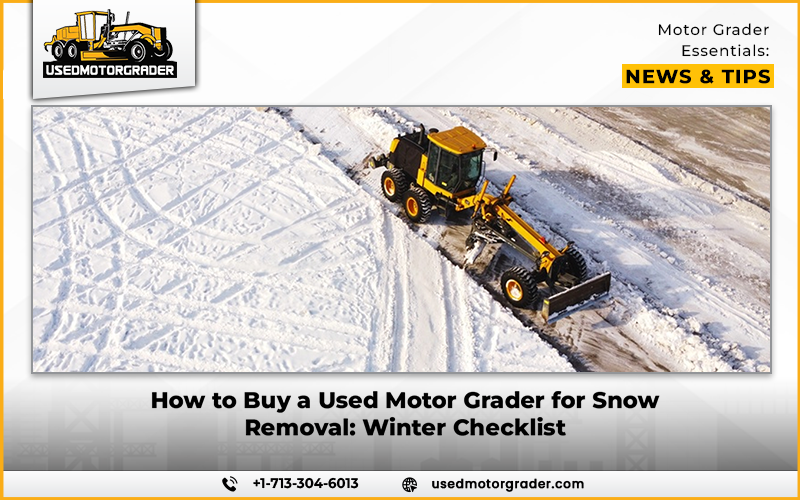
Purchasing a used motor grader for snow removal can help stretch a winter budget, but only if the unit is ready when the first storm arrives. A low asking price is meaningless if the grader cannot be used because to poor traction, a worn circle, weak hydraulics, or a malfunctioning defroster.
This article assists municipal teams, road contractors, and fleet managers in matching machine configuration to their routes, inspecting the most important components, estimating the true cost of winter preparation, and determining if buying or renting is more cost-effective. Use the checklist before making an offer to avoid surprises.
Which Used Motor Grader Configuration Is Best for Winter?
Is a Used Motor Grader For Snow Removal Better With AWD?
AWD can increase traction but not prevent slipping. Match it to the slopes, ice, snow depth, and route length. Standard drive may be appropriate for well-maintained roads; mountainous or icy routes call for AWD. Compare uptime to the price premium.
Which Tires and Tire Chains Do You Need For Snow Removal?
Check tread, sidewall damage, tire match and chain fit. As Per Cat’s guidance, chains may fit rear and sometimes front tires. On hard-frozen surfaces, guidance limits chain travel to 6–8 mph; follow the manual. Budget for repairs and storage.
Which Snow Blade, Plow or Wing Should You Look For?
V-plows break deep drifts, moldboards clean regular areas, and wings widen passageways and manage banks. Check the mounts, hydraulics, controls, and fit. A snow plow motor grader is only useful when it is appropriate for the task at hand. A grader with a snow wing clears bigger passages, although it requires further inspection before purchasing.
How Much Power and Visibility Do You Need For Snow Removal?
Adjust power for route width, snow, and pace. Test the lights, mirrors, camera, wipers, and defroster. Some models have variable horsepower (VHP), which varies output based on gear or demand. The word “vhp grader snow removal” does not replace reading the handbook and determining the rated power.
Used Motor Grader Winter Inspection Checklist
1. Engine, Cold Starts and Cooling System
Request a cold start. Check the cranking, smoke, warning lights, noise, leaks, batteries, coolant protection, and any block heaters. A heated engine can disguise starting problems. Use fluids and starting aids that are approved for the projected temperature.
2. Cab Heating and Visibility
Test heater, defroster, wipers, washer, seals, mirrors, windows, lights, alarm and seat belt. Without clear glass and good visibility, a mechanically sound grader may still be unfit for winter shifts.
3. Tires, Traction and Chains
Inspect wear, damage, inflation, wheel hardware and chain fit. Ensure tires suit snow, ice or mixed pavement. Check included chains and tensioners; they may be worn or incorrectly sized.
4. Moldboard, Circle and Snow Attachments
Check cutting edge, end bits, moldboard, circle teeth, drawbar and guides. Cycle the blade for binding. Look for cracked mounts, improvised welds or missing hardware. A grader with wing for snow also needs sound supports and controls.
5. Transmission, Hydraulics and Drivetrain
Test gears, brakes, steering, articulation, wheel lean, blade lift, side shift and circle rotation. Check leaks and tandem-drive noise. Hydraulics should move smoothly and hold position. Include major repairs in negotiations.
6. Hours, Service Records and Hidden Winter Damage
Compare hours with seat, pedal, tire and component wear. Review records and repairs. Inspect frame, wiring and underbody for corrosion after salted-road work. Photos cannot confirm structure; get an independent inspection if defects are unclear or costly.
How Do You Test a Used Motor Grader Before Buying?
- Start cold and safely test the gears, brakes, steering, blade, and attachments.
- Check for drift, leaks, noise, and delayed responses.
- Request documentation and a technician’s inspection.
- Remote buyers should request dated startup video, gages, articulation, attachment use, and serial-plate photographs; video cannot replace a hands-on review.
Practical experience: Hours alone do not show condition; wear and service records must back up the reading. Before purchasing a used motor grader for snow removal, have major repairs estimated in writing.
How Much Does a Used Snow-Removal Grader Really Cost?
- Calculate purchase price + repairs + attachments + winter preparation + transport.
- Add fuel, service, tire wear, chains, parts and downtime.
- Compare costs with expected hours and revenue.
A cheap machine needing tires, a wing and hydraulic repairs can cost more than a better-equipped unit. Judge a snow plow motor grader by ready-to-work cost. Check our winter AWD grader demand outlook.
Should You Buy or Rent a Motor Grader for Seasonal Snow Removal?
Purchasing accommodates recurrent routes and maintenance assistance. When storage and repair costs surpass the benefits of ownership, renting may be appropriate for short-term contracts or unpredictable snowfalls. Compare leasing expenses against ownership, resale value, and downtime. Judge a vhp grader snow removal option based on its condition, not its label.
Conclusion: Choose Winter Readiness, Not Just a Low Price
Choose a grader that matches your routes, traction needs, and snow attachments. Compare its condition, repair costs, and winter readiness before buying.
Browse our used motor graders for sale and contact our team about winter configurations. Confirm repairs and delivery timing before storms cause downtime.
Frequently Asked Questions
Is a motor grader suitable for heavy snow removal?
Yes, on suitable roads with the right setup. Deep drifts or severe ice may need other tools.
Do you need AWD on a motor grader for snow removal?
No. AWD may help on icy slopes, but terrain, tires, chains and conditions affect traction.
What should you check first when buying a used snow-removal grader?
Check brakes, cold starts, tires, visibility and attachments first, then inspect hydraulics, transmission and records.
Is it better to buy a grader with a snow blade already installed?
It may save retrofit cost if sound. Check mounts, hydraulics and controls.